Air Battle for Leningrad: 1941–1944 by Dmitry Degtev (.ePUB)
File Size: 4.5 MB
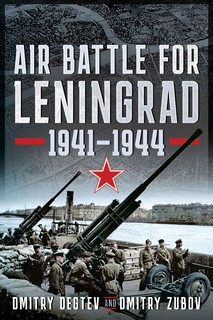
Air Battle for Leningrad: 1941–1944 by Dmitry Degtev, Dmitry Zubov
Requirements: .ePUB reader, 4.5 Mb
Overview: This book examines the full story of the German and Soviet aerial battles in the Leningrad sector during the siege.
The Siege of Leningrad was one of the most brutal battles of the Second World War. The second largest and most populous city in the Soviet Union, Leningrad, now St. Petersburg, was one of the three priority targets of the German invasion, Operation Barbarossa. A total of 333 large military factories were concentrated in Leningrad and, accordingly, 565,000 workers lived there, producing tanks, aircraft, artillery and warships.
On 10 July 1941, German tank divisions, having broken through the front south of the city of Pskov, reached the town of Luga. From there, Hitler’s forces had just over 110 miles to go to Leningrad. Meanwhile, the city was feverishly preparing for defense. Stalin’s deputies, Zhdanov and Voroshilov, planned to use the entire combat-ready population of Leningrad for that purpose.
Believing that the city would soon be captured by the Germans, Stalin ordered the immediate evacuation of military factories and skilled workers from Leningrad to the East. Before the city was completely blockaded, most of the valuable equipment had been removed. However, the remaining civilian population, including about 400,000 children, were left to their fate.
In early September 1941, German divisions supported by the Luftwaffe’s VIII Fliegerkorps, captured the town of Shlisselburg. Leningrad was now cut off from the rest of the Soviet Union. Hitler believed that the city would soon echo to the sound of German jackboots.
Leningrad, however, did not give up. In the autumn of 1941, the Wehrmacht did not have enough forces to take the city and for three long years the main means of fighting its defenders were the Luftwaffe and long-range artillery. In September 1941, when the systematic bombing and shelling began, many thousands of families tried to leave Leningrad, but nearly all of the escape routes were cut off. Food supplies in the city sharply decreased.
Genre: Non-Fiction > History
Free Download links: