Artificial Neural Networks for System by Serhat Seker (.ePUB)+
File Size: 28.8 MB
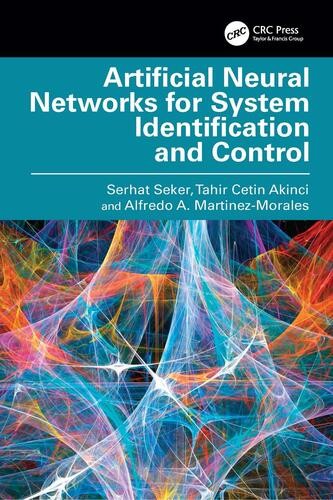
Artificial Neural Networks for System Identification and Control by Serhat Seker, Tahir Cetin Akinci, Alfredo A. Martinez‐Morales
Requirements: .ePUB, .PDF reader, 28.8 MB | True PDF, True EPUB
Overview: In an age where intelligent systems are transforming engineering practice, Artificial Neural Networks for System Identification and Control offers a clear roadmap to mastering Artificial Intelligence (AI)‑driven modeling and control. From mathematical neuron models to adaptive Artificial Neural Network (ANN)‑based controllers, this book combines theory, algorithms, and hands‑on coding to help readers design and analyze intelligent systems. Rich with visual examples and real‑world case studies, it demonstrates how neural networks outperform traditional control methods in handling nonlinearity, uncertainty, and dynamic system behavior. Artificial Neural Networks (ANNs) have transformed the landscape of system identification and control, offering unparalleled capabilities in handling nonlinear systems, optimizing performance, and adapting to various operational conditions. This book, Artificial Neural Networks for System Identification and Control, aims to provide a comprehensive understanding of the theoretical foundations, mathematical models, and practical applications of ANNs in these critical areas. Throughout this book, we delve into the intricate workings of artificial neurons, explore several neural network topologies, and elucidate the underlying mathematical models. We also present a detailed examination of algorithms, such as backpropagation, which is used in both feedforward and recurrent neural network topologies, highlighting their relevance in system identification and control tasks. By integrating theoretical concepts with practical examples and case studies, we aim to make this book a valuable resource for students, researchers, and professionals alike. The Python scripts utilize widely used libraries like NumPy for numerical computations, Matplotlib for visualization, and Scikit-learn for constructing and training neural networks. By following these examples, readers will gain practical insights into the process of implementing feedforward neural networks using Python, enabling them to adapt and extend these methods for their specific use cases. This book is intended for engineers, researchers, and advanced students seeking to apply Artificial Intelligence to control theory, robotics, and signal processing and to design smarter, more adaptive engineering systems.
Genre: Non-Fiction > Tech & Devices
Free Download links: