Embodied Intelligence by Sheila L. Macrine (.PDF)
File Size: 34.5 MB
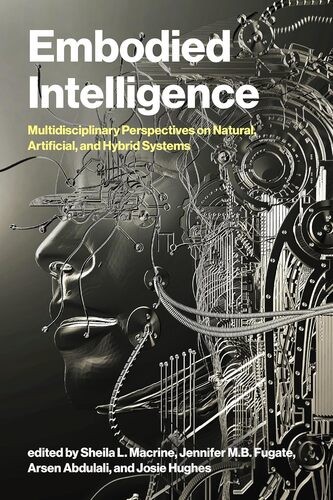
Embodied Intelligence: Multidisciplinary Perspectives on Natural, Artificial, and Hybrid Systems by Sheila L. Macrine, Jennifer M. B. Fugate, Arsen Abdulali, Josie Hughes
Requirements: .PDF reader, 34.5 MB | True PDF
Overview: An exploration of embodied intelligence that moves beyond the traditional focus on brains and code to the role of embodiment across various disciplines. Intelligence research is undergoing a radical transformation, moving beyond the traditional focus on brains and code to increasingly recognize the role of embodiment, as well as our understanding of goal-directed behavior across different scales and substrates. In this edited collection, experts across fields including philosophy, phenomenology, neuroscience, cognitive psychology, robotics, Artificial Intelligence (AI), bio-inspired design, biology, and bioengineering initiate transdisciplinary dialogues and facilitate the sharing of insights on embodiment, enabling a new understanding of embodied intelligence and how intelligence manifests across diverse substrates. Part I examines the philosophical and theoretical foundations of Embodied Intelligence (EI). It begins by highlighting a significant convergence between human-embodied cognition (HEC) and Embodied Artificial Intelligence (EAI), emphasizing a paradigm shift that recognizes the crucial and reciprocal influence of the body and environment in shaping intelligent behavior, moving away from traditional brain-centric perspectives. Part II explores Embodied Artificial Intelligence (EAI). EAI is modeled based on collective intelligence and draws on the principle of active inference and the free energy principle (FEP). This part discusses the importance of equipping artificial embodied agents (AEAs) with a perceptuo-motor apparatus for perceiving and acting, which is crucial for grounding, embodiment, and situatedness.
Genre: Non-Fiction > Educational
Free Download links: