MIT App Inventor for AI and IoT by Dogan Ibrahim (.PDF)
File Size: 15.8 MB
MIT App Inventor for AI and IoT: Build Smart Applications with Raspberry PI, Arduino and ESP32 by Dogan Ibrahim
Requirements: .PDF reader, 15.8 MB | True PDF
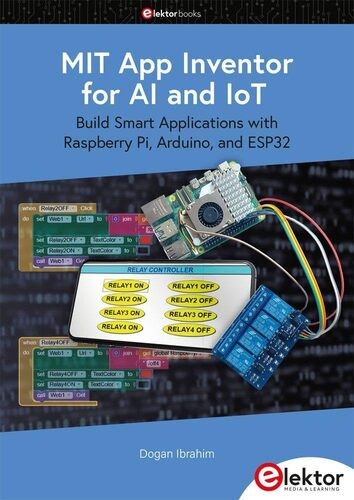
Overview: Discover how easy and exciting mobile app development can be with MIT App Inventor. This hands-on guide takes you from basic concepts to building real-world mobile applications using a simple visual programming approach-no prior coding experience required. You will create IoT and AI-powered apps for Android devices and explore how App Inventor can also be used with iPhones and iPads. The MIT App Inventor platform was developed by the Massachusetts Institute of Technology as a powerful yet simple tool for creating Android applications. MIT App Inventor allows users to build fully functional mobile apps using a visual block-based programming environment. Instead of writing lines of code, users create programs by dragging and connecting blocks that represent programming logic. This approach makes it easier for beginners, students, educators, hobbyists, and even professional developers to quickly build mobile applications while focusing on creativity and functionality rather than syntax. MIT App Inventor provides a rich set of built-in components that enable developers to design interactive user interfaces and implement complex functionalities with minimal effort. Applications can include buttons, text boxes, labels, images, and multimedia elements. In addition, App Inventor supports advanced features such as text-to-speech, speech recognition, camera integration, messaging services, and internet connectivity. These features allow developers to create applications that are not only educational but also practical and useful in real-world scenarios. Additionally, it promotes computational thinking skills and builds a strong foundation for transitioning to more advanced programming languages like Java, Kotlin, or Python. In addition to smartphone features, MIT App Inventor can also communicate with external hardware devices using wireless technologies such as Wi-Fi and Bluetooth. This capability makes it an ideal platform for developing Internet of Things (IoT) applications. Microcontrollers and embedded systems such as the Raspberry Pi Pico (2)W, Raspberry Pi 5, Arduino UNO R4 WiFi, and ESP32 can be connected to mobile apps to build intelligent systems capable of monitoring and controlling real-world devices. Examples include smart home automation, environmental monitoring systems, voice-controlled devices, and remote-control systems. Designed for beginners, students, and hobbyists, this book focuses on learning by doing. By the end, you will have the skills and confidence to create your own innovative applications that interact with both the digital and physical worlds.
Genre: Non-Fiction > Tech & Devices
Free Download links: